Research & Development — Teaching machines to sign — Migam
Skip to content
Migam
Research & Development

Teaching machines to sign.
Since 2012.

We built our first neural network for sign language in 2012 — long before AI was fashionable. Today we pursue a bigger vision: a hub connecting sign language with communication, business, science and technology — one place where interpreters, researchers, Deaf organizations and companies meet.

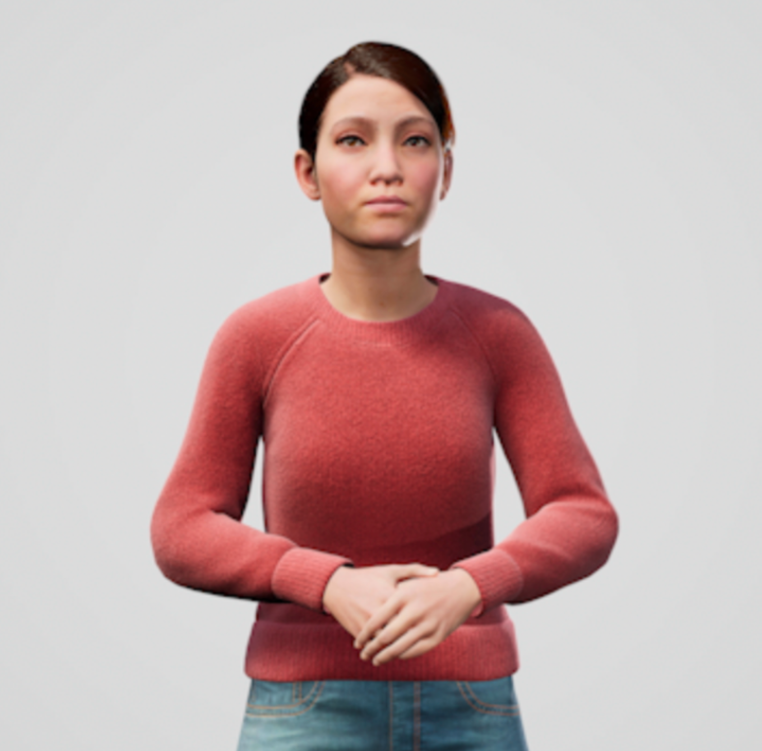
At migam.ai we develop automatic translation into sign languages: text becomes an utterance of a photorealistic 3D avatar, with Deaf native signers and linguists overseeing the quality of every stage.

Human-in-the-loop: AI accelerates, humans guarantee.

What our model stands on

Our own model, our own data

Years of Migam interpreters' work are a unique foundation: hundreds of hours of recordings, our own studio and a Polish Sign Language corpus built over a decade. The model grows within the NVIDIA Inception program, and we validated the methodology in a paid pilot with a global technology company.

Grammars of 9 sign languages

Every country signs differently. We have grammatical descriptions of nine sign languages — from Polish to American — and an architecture designed from day one for many languages, not just one.

Science in our DNA

The project is supported by a scientific board of sign language researchers from Europe, the USA and Israel, and the language team is led by a Chief Linguist educated at the world's leading Deaf university.

From our lab

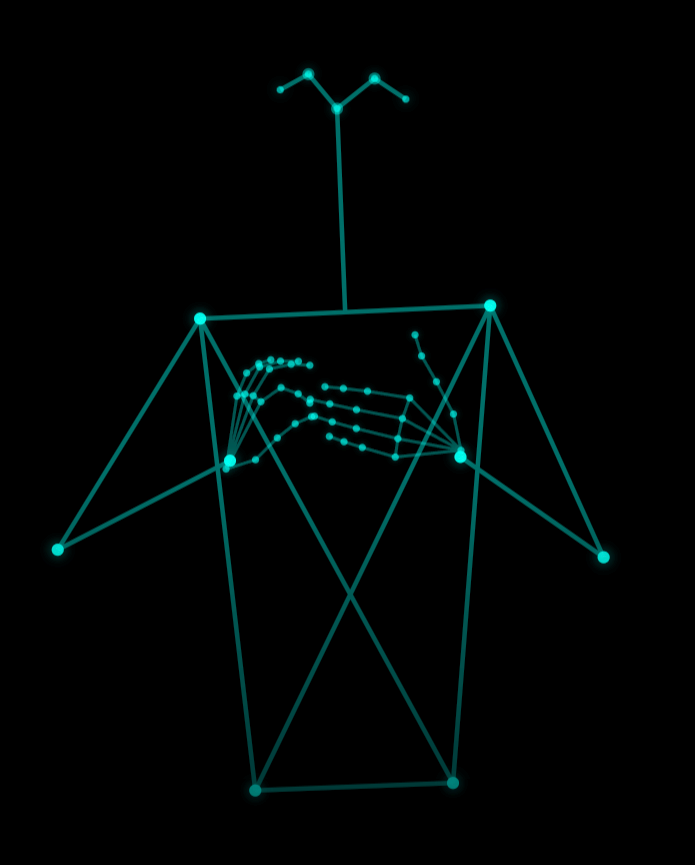
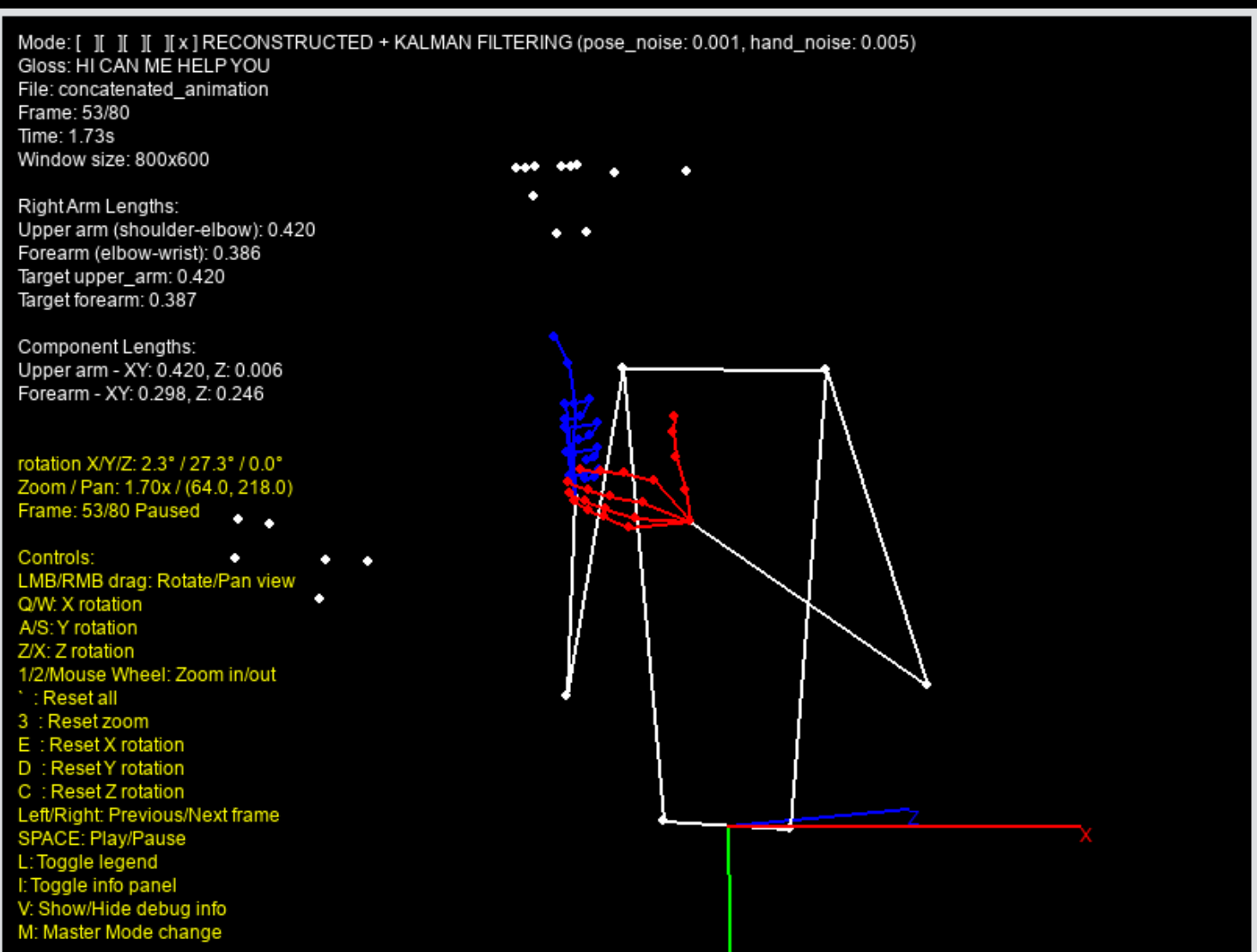
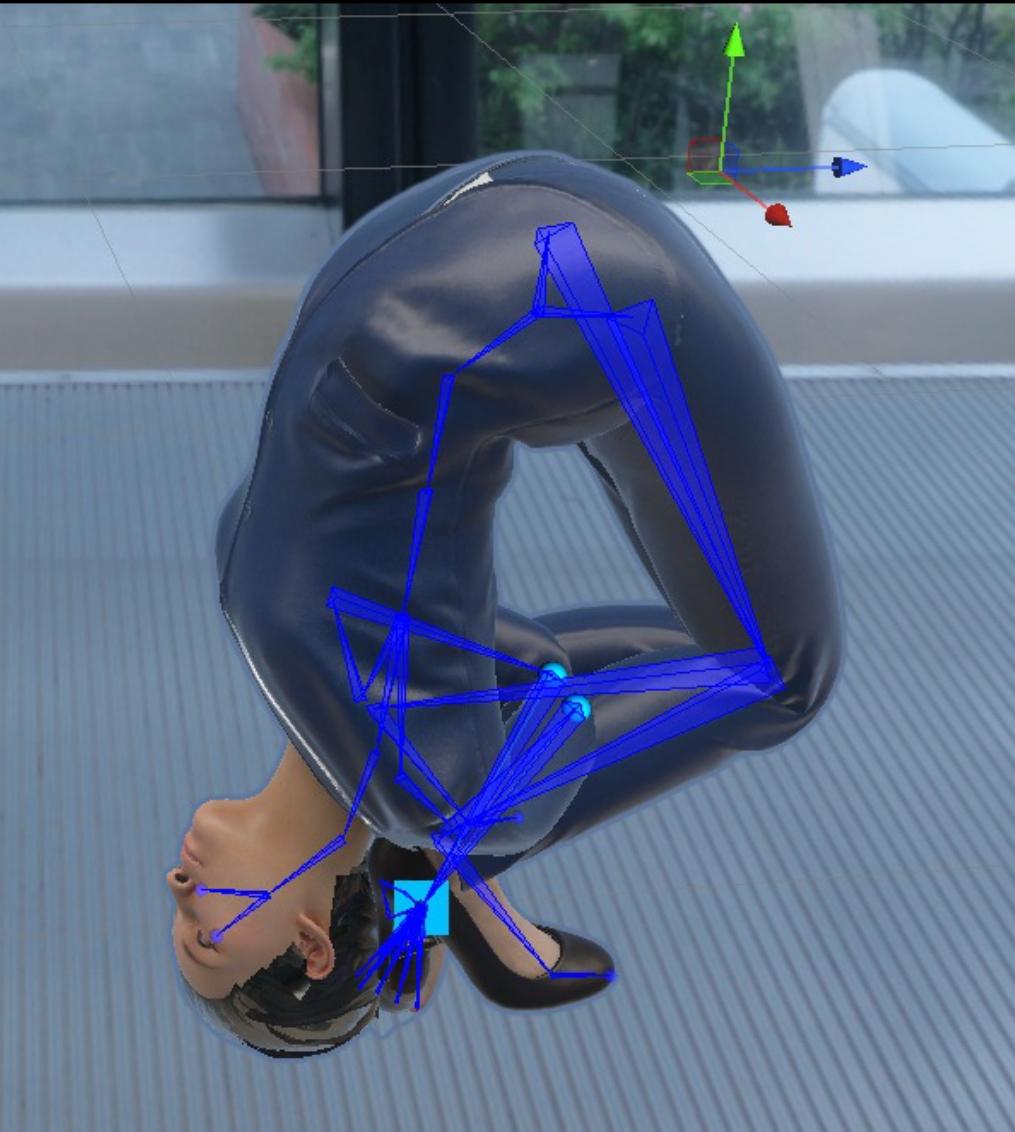
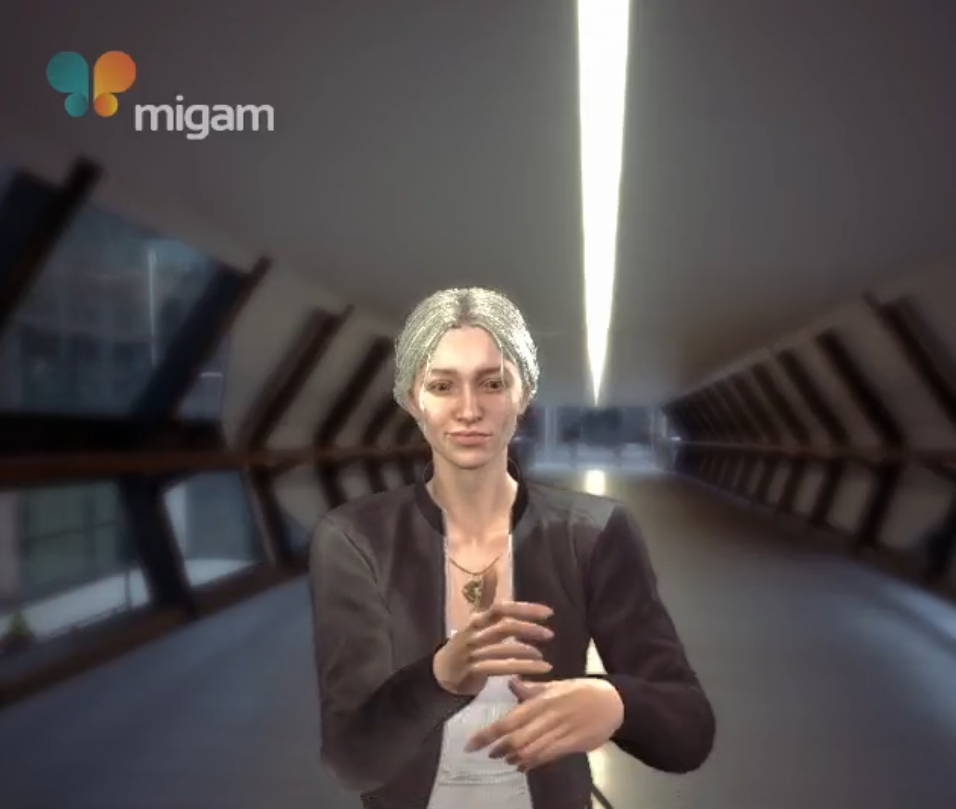
Evolution of the avatar

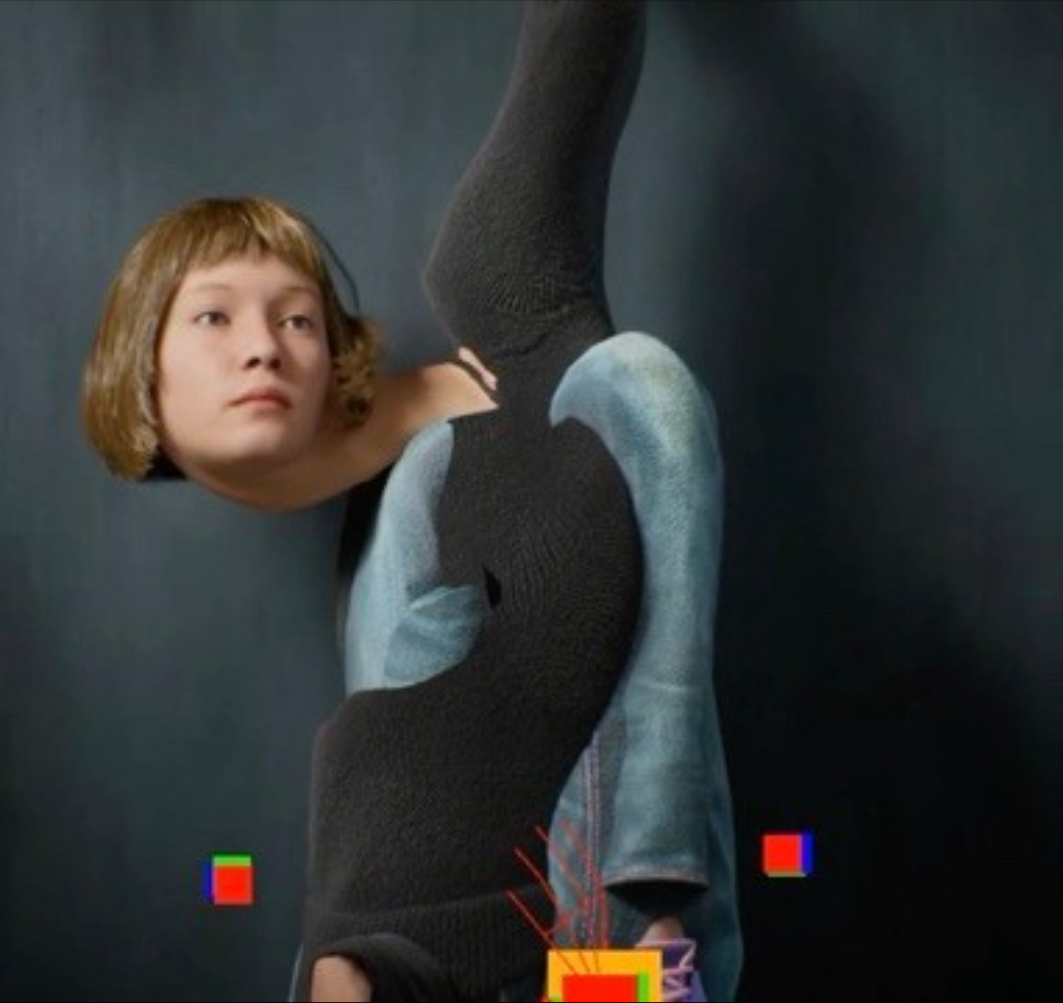
From a point cloud to a photorealistic character — this is what every sign language utterance really goes through. Real screenshots from our pipeline, bloopers included.

{{ s.alt }}
{{ s.nr }}
{{ s.title }}
{{ s.desc }}
We show stages 3–4 on purpose — honestly, because that's what real R&D looks like. Every rigging glitch and every "broken" pose teaches the model before a user ever sees it.
Under the hood

Representation, not "text plus gestures"

Sign languages are full visual-spatial languages — you can't just "bolt them onto" text. That's why we build a representation layer: from grammar, through motion tokens, to photorealistic rendering.

From text to a sign language utterance
INPUT
Text
document, subtitles, script
LINGUISTICS
Sign Grammar Layer
meaning and sign order, not a copy of spoken syntax
MOTION
Motion representation
motion tokens describing body, hands and face
RENDER
Photorealistic avatar
Unreal Engine 5 / MetaHuman → finished video
SHIP GATE
Deaf QC
Deaf native signers decide what ships — not an algorithm
Quality first, not real-time: we render offline, and synthetic checks only filter — a human decides.

One sign = 5 simultaneous channels

That's why captions or "waving hands" aren't enough — the model must control all of them at once.

Handshandshape · location · movement
Facebrows · squint · mouthing
Body & spacespatial roles · classifiers
Timingprosody · smooth transitions between signs
Grammarnon-manual markers — questions, negation, mood

Models change. The representation stays.

The architecture is independent of any single AI model — swappable parts can be replaced as technology advances, while our core keeps working.

Transformer / LLMSWAPPABLE
Sign Grammar LayerOUR CORE
Sign Motion TokensOUR CORE
Motion backboneSWAPPABLE
UE5 / MetaHuman avatarOUTPUT
Plus a data flywheel: content → annotation → motion data → generation → Deaf QC → better data. Every cycle raises the quality of the next.
Guiding principle: we don't replace interpreters. We scale access where human interpretation cannot economically cover the volume of modern content.
We produce knowledge

Not just a product. We're learning to understand languages and communication better.

We document every stage like a research paper — with assumptions, literature and measurable quality thresholds. That knowledge stays: grammar descriptions, sense lexicons and a methodology the next sign languages can build on.

An example from our documentation

How does the avatar know which meaning of a sign to pick?

One sign can carry many senses — like the word "bank" in English. Word Sense Disambiguation (WSD) is choosing the right meaning in context. Three layers handle it: the Lexicon (which senses exist — a linguistic decision), the Corpus (how they are used — a corpus decision) and WSD rules (how to choose from the source text — an engineering decision).

Only "double-stage" metaphors create ambiguity that needs resolving.
Strongly iconic signs "hold" their meaning — visual motivation blocks the metaphor.
Homonymy vs polysemy: 5 criteria + agreement of ≥ 2/3 Deaf native signers.
We measure quality before production: inter-rater agreement κ ≥ 0.70, rule precision ≥ 0.80, zero regressions.
Fenlon · Schembri · Cormier 2018 Rutkowski 2010 · 2011 Johnston 2010 Meir 2010 Schwarzenberg · Kollien · Herrmann 2024 Landis & Koch 1977

Two language tracks, one workshop

ASL (USA) — linguists educated at the world's leading Deaf university, a Deaf expert team with a "Deaf-seal" quality gate, and the text → motion model pipeline.
PJM (Poland) — a sense schema and type classification, the PJM corpus, academic consultation (University of Warsaw) and 8 Migam native-signer interpreters verifying forms by majority vote.
Both tracks share one sense schema and one avatar pipeline — every next language starts with a ready workshop.

Join us

Do you research sign languages? Run a corpus, a lexicon or sign linguistics courses? Join the workshop — joint publications, grant applications and a methodology ready to adapt to your language.

kontakt@migam.org →

Since when and with whom

Strong partners and hard evidence — no overpromising.

2012
First neural network for sign language
Early sign-recognition experiments — including prototypes built on Microsoft Kinect.
2013–22
We learned three times how NOT to do it
…and it hurt. Successive attempts — from gesture recognition to early avatars — ended in lessons instead of a product. Every failure narrowed the path to the architecture that finally worked. Those lessons are part of our knowledge too.
2023
Work on migam.ai begins
Model training starts with Max Salamonowicz, who brought model-training know-how, and Tomek, author of the first dataset: in a single weekend he prepared more data than had been produced in the two previous years. As Migam we were already working with WHO, UNHCR, Samsung, ING and Orange.
2024
Technology partners
Microsoft for Startups (Azure) and an Oracle Cloud Infrastructure partnership; membership in NVIDIA Inception. Avatar development accelerates.
2025
The global stage
1st place at Web Summit Pitch Night · presentation at the European Parliament · DeepTech Startup Award (French Tech Connect) · double VivaTech podium · NVIDIA GTC in Paris and CSUN.
2026
From the lab to production
ASL in production, PJM in a pilot with the Polish Bank Association. Teams growing in Poland and the USA.

These aren't plans. We sign letters of intent.

The hub is already growing: we have signed letters of intent with partners from five European countries — from the Benelux to the Balkans — who want to develop their sign languages with us. The collaboration model is simple: we bring the technology, the AI pipeline and a proven methodology — the partner brings linguists, Deaf native signers and knowledge of their market. Together we walk the path from recordings and annotation to working translation. We collaborate with Deaf organizations, companies and universities — including joint grant applications.
Your sign language could be next.
Always with the Deaf community involved and research ethics first.
Call an interpreter